
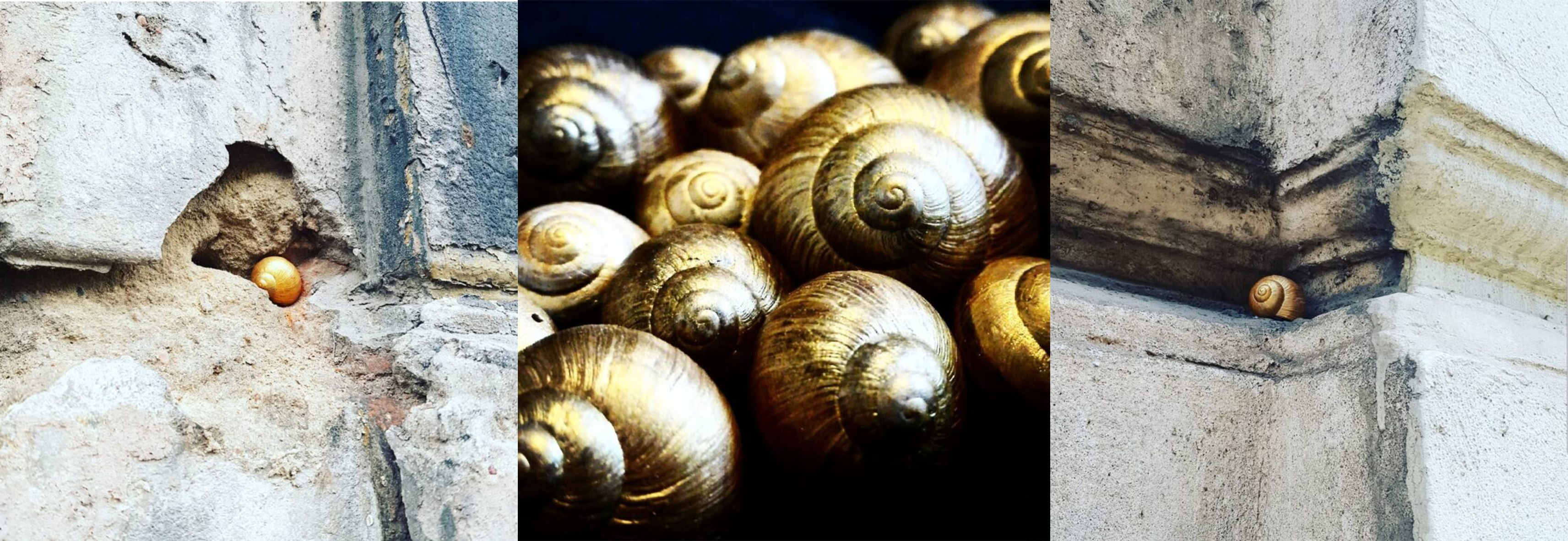
“Złote Ślimaki” to projekt, który wziął się z miłości do Łodzi – mojego rodzinnego miasta oraz z chęci pozostawienia w nim, jak wszystko inne nietrwałego, ale jednak śladu, czytelnego dla uważnego i wrażliwego odbiorcy. Jest wyrazem chęci dokonania artystycznej ingerencji w tkankę miasta, które wciąż umiera i wciąż odradza się w nowych, nieoczywistych formach.
Miłość do Łodzi jest trudna, to podkreśla wiele osób ją deklarujących. Trudna ze względu na dziurawe drogi, ciągłe remonty, na ciągnący się za nią stereotyp “miasta meneli” i to, że nie jest Warszawą ze wszystkimi jej atrakcjami i bliskością szans i możliwości. Jest w tym mieście jednak coś, co sprawia, że trudno je porównać z jakimkolwiek innym miejscem. Coś, co czyni je na tyle wyjątkowym i atrakcyjnym, że jednak ma ono swoich zagorzałych fanów (z autorką tekstu na czele). Łódź – miasto kominów, miasto pałaców, miasto rzek – można by te określenia wymieniać w nieskończoność. I choć inne miasta również mogą pochwalić się rzekami, pałacami, a nawet kominami, to chyba żadne z nich nie dysponuje takim połączeniem tych czynników, a co za tym idzie nie ma tak interesujących i związanych z przemysłową historią detali architektonicznych.
O Łódzkim detalu architektonicznym napisano już kilka książek, ale ponieważ czytelnictwo w Polsce nie stoi aktualnie na wysokim poziomie, wciąż mało kto zauważa, że pośród zdobiących łódzkie kamienice i pałace pulchnych amorków czy liści akantu kryją się motywy zupełnie niespodziewane. Niniejsza publikacja nie służy oczywiście dokładnemu ich omówieniu, ale trudno nie wspomnieć tu choćby o egipskich głowach (kamienica na rogu Jaracza i Wschodniej), młotach i kołach zębatych (Jaracza 47) czy wilkach trzymających w pyskach czółenka tkackie (Piotrkowska 143). Wystarczy dobrze wytężyć wzrok i mózg by zobaczyć, że to, co uważamy za oczywiste i banalne (jak wspomniane amorki) kryje w sobie wiele warstw znaczeniowych.
Podobnie sprawa ma się ze Złotymi Ślimakami. O tym, że to artystyczna ingerencja nie od razu można się zorientować – ślimaki, mimo, że złote, dość szybko wtapiają się w tkankę architektoniczną. Pokrywa je kurz i brud spadający razem z deszczem, wiatr nawiewa na nie liście i nasiona drzew. Po pewnym czasie stają się niezauważalne, stopione z murem, niczym opisywane wyżej detale.
Dlaczego ślimaki?
Długo zastanawiałam się jakiego rodzaju ingerencja będzie najbardziej odpowiednia żeby wyrazić mój artystyczny zamysł. Nie chciałam powielać pomysłów moich kolegów w postaci grafitti czy plakatów. Rozważałam czego brakuje mi w moim mieście i doszłam do wniosku, że zbyt mało tu natury – roślin i zwierząt. Potem, będąc w plenerze zobaczyłam taką rzecz: wielki ślimak był owinięty wokół czegoś równie dużego i włochatego. Gdy podeszłam bliżej zadałam sobie sprawę, że patrzę na głowę martwego ptaka, na której ów ślimak żerował. Widok był odstręczający, ale i fascynujący jednocześnie; rozkładająca się głowa ptaka i ślimak, który ze swoją wielką skorupą stanowi jednak dość ładny widok. Natychmiast nasunęło mi się skojarzenie z łódzkimi kamienicami – obłażącymi z tynku i farby, wyglądającymi na coś, co ulega powolnemu rozkładowi, jednocześnie ozdobionymi niezwykłymi detalami. W dodatku detale te niejednokrotnie nawiązują do natury właśnie. Wtedy podjęłam decyzję o dodawaniu własnych detali w postaci Złotych Ślimaków wszędzie tam, gdzie straszą ubytki, odwracając uwagę od dawnej urody kamienic. Moje ślimaki z jednej strony „żerują” na rozkładzie, z drugiej zaś zwracają uwagę na to, na czym żerują. Często dopiero patrząc na coś zupełnie nieprzystającego, element niepasujący, zdajemy sobie sprawę z wyglądu całości. Złote Ślimaki każą przystanąć i zastanowić się nad tym, na co się patrzy. Zwrócić uwagę na szczegóły, a tych na łódzkich kamienicach jest wiele.
Przy realizacji projektu nie zginął żadnej ślimak
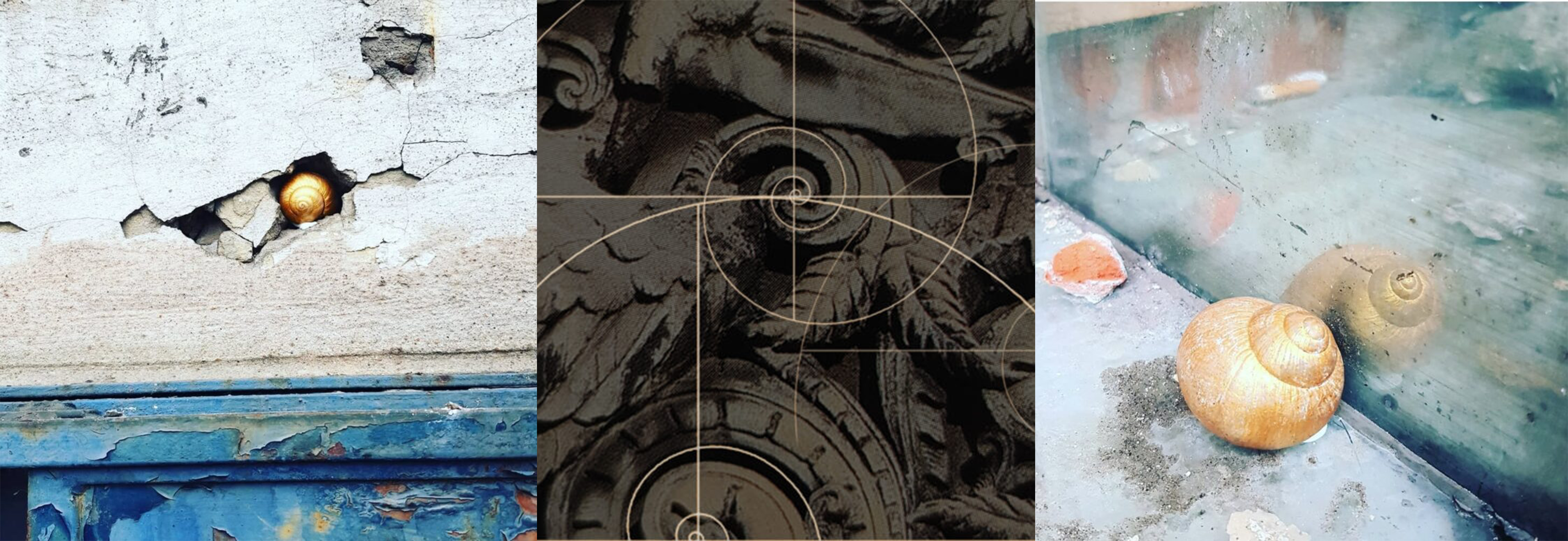
Nie można też pominąć sprawy oczywistej: moje ślimaki to nie pierwsze ślimaki na łódzkich fasadach. Motyw zakręconej skorupy od wieków jest bardzo popularny w sztuce zdobniczej. Wystarczy spojrzeć chociażby na woluty, czy też inaczej ślimacznice wieńczące kolumny jońskie, tak chętnie powielane na fasadach z końca XIX wieku. Choć ich symbolika (wieczność, cykliczność) może się wydawać nieco nieprzystająca do aktualnego obrazu rozpadających się kamienic to, gdy spojrzeć na to szerzej można dostrzec, że miasto funkcjonuje w nieustającym cyklu narodzin i śmierci, zarówno jeśli chodzi o mieszkańców jak i tkankę architektoniczną. Można by podnieść argument, że Łódź starzeje się, wymiera i wyludnia. Może zatem moje ślimaki to pobożne życzenie, wyraz tlącej się tu iskierki optymizmu, którym najwyraźniej tryskam ja i mocno inwestujący deweloperzy.
“Golden Snails” is a project born from a love for Łódź - my hometown - and a desire to leave a mark upon it; a mark that, like everything else, is transient, yet still discernible to an attentive and sensitive observer. It represents an artistic intervention into the fabric of a city that is constantly dying and, at the same time, being reborn in new, unexpected forms.
Loving Łódź is difficult - a sentiment echoed by many who profess such affection. It is challenging due to potholed roads, perpetual construction work, the lingering stereotype of it being a “city of bums,” and the fact that it is not Warsaw, with all the attractions and the proximity to opportunities that the capital offers. Yet, there is something about this city that makes it incomparable to any other place - something that renders it so unique and compelling that it has garnered a devoted following (myself included). Łódź - a city of chimneys, a city of palaces, a city of rivers - the list of such descriptions could go on forever. And while other cities may also boast rivers, palaces, and even chimneys, perhaps none possess this particular combination of elements, and consequently, none feature such fascinating architectural details rooted in an industrial past. Several books have already been written about the architectural details of Łódź. However, given that reading habits in Poland are currently not at a high level, few people notice that hidden among the plump cupids and acanthus leaves adorning the city’s tenement houses and palaces are some truly unexpected motifs. While this publication does not aim to provide an exhaustive analysis, it is worth mentioning a few examples: Egyptian heads (on the tenement house at the corner of Jaracza and Wschodnia streets), hammers and cogwheels (at 47 Jaracza Street), and wolves holding weavers’ shuttles in their jaws (at 143 Piotrkowska Street). One only needs to look closely - and engage one’s mind - to realize that what we might dismiss as obvious or banal (such as the aforementioned cupids) actually contains multiple layers of meaning.
The same is true for the "Golden Snails." It is not immediately apparent that these are an artistic intervention; despite their golden hue, the snails quickly blend into the architectural fabric. They become covered in dust and grime washed down by the rain, while the wind deposits leaves and tree seeds upon them. Over time, they become all but invisible—fused with the masonry, much like the architectural details mentioned earlier.
Why snails?
I spent a long time considering what kind of intervention would best express my artistic vision. I did not want to replicate the approaches taken by my peers, such as graffiti or posters. I reflected on what I felt was missing in my city and concluded that there was simply too little nature - too few plants and animals. Later, while out in the open, I came across something: a large snail wrapped around an object that was equally large and hairy. As I drew closer, I realized I was looking at the head of a dead bird, upon which the snail was feeding. The sight was repulsive, yet simultaneously fascinating - the decomposing bird head paired with a snail, whose large shell actually presented quite a striking image. It immediately brought to mind the tenement houses of Łódź - buildings with peeling plaster and paint, appearing to be in a state of slow decay, yet adorned with extraordinary details. Furthermore, these details frequently draw inspiration from the natural world. It was then that I decided to introduce my own details - "Golden Snails" - wherever unsightly gaps or damage detracted from the former beauty of these buildings. In a sense, my snails "feed" on the decay, while simultaneously drawing attention to the very thing they are feeding upon. Often, it is only when we encounter something entirely incongruous—an element that doesn't quite fit—that we truly begin to perceive the whole. The Golden Snails invite us to pause and reflect on what we are looking at; they encourage us to notice the details—of which there are many on the tenement houses of Łódź.
No snails were harmed in the creation of this project.
And, of course, one obvious point must be mentioned: my snails are not the first snails to appear on the facades of Łódź. The motif of a coiled shell has been highly popular in decorative arts for centuries. One need only look at the volutes - or spirals - that crown Ionic columns, a feature frequently replicated on late 19th-century facades. While their symbolism (eternity, cyclicality) might seem somewhat incongruous with the current state of crumbling tenement houses, a broader perspective reveals that a city exists within a perpetual cycle of birth and death - both in terms of its inhabitants and its architectural fabric. One could argue that Łódź is aging, dying out, and becoming depopulated. Perhaps, then, my "snails" are a mere wishful thought - an expression of a lingering spark of optimism, one that clearly radiates from me, as well as from the developers who are investing so heavily here.